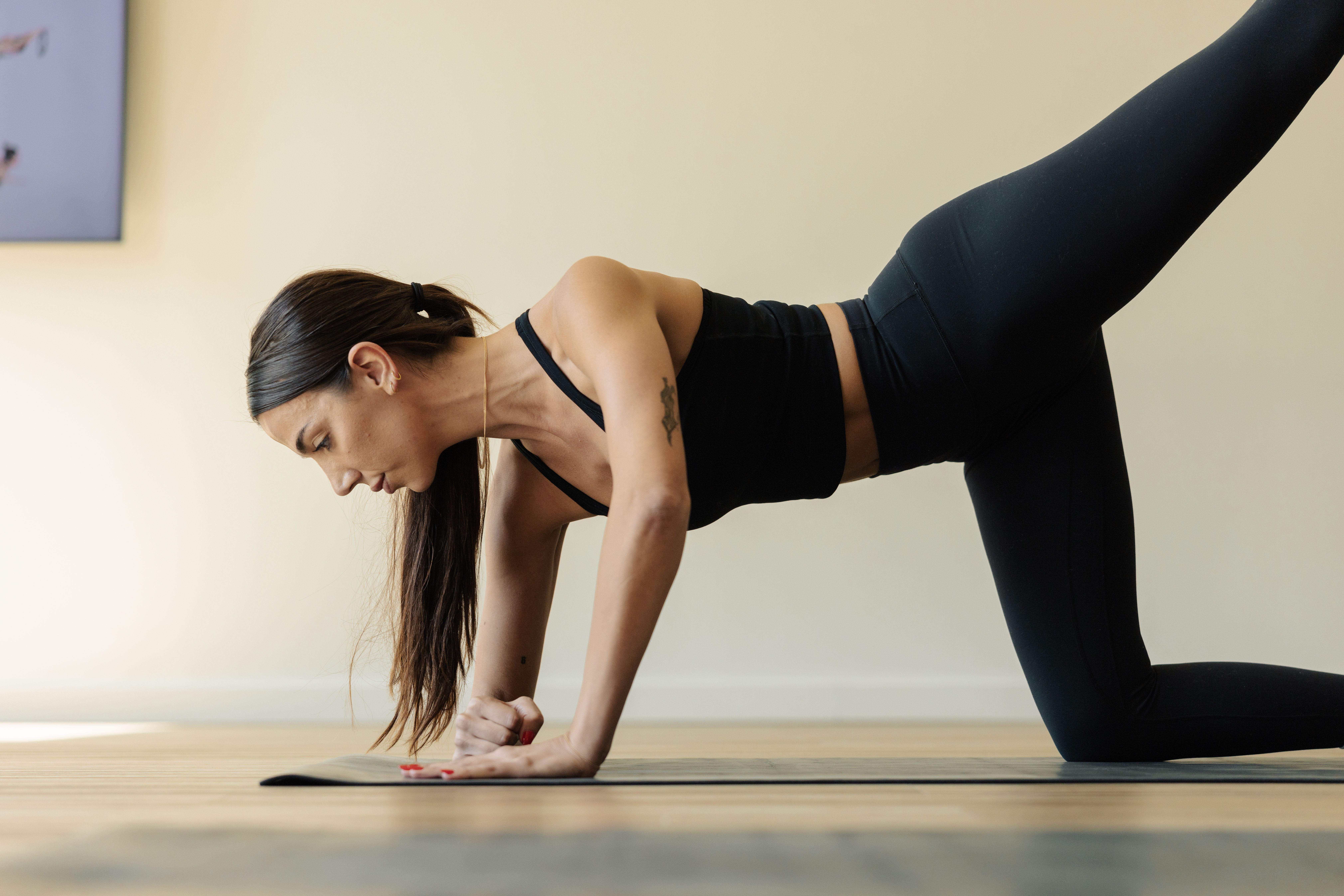
Yoga Poses and Stretches for Period Pain
On average, women spend around 3,500 days of their lives on their period1.
For many, that means navigating cramps, abdominal discomfort, and the persistent unease that can make workouts – or even simple tasks – feel harder than usual.
At FS8, we believe you don’t have to stop exercising during your period – you just need to change gear. That might mean shifting from higher-intensity workouts and running to gentle yoga and stretches for period cramps that support your body – without pushing it too hard.
That’s one of the reasons why our classes incorporate a unique blend of yoga, Pilates, and tone into low-impact workouts. Through a mix of stretching and dynamic movements, you can still get your exercise fix – just in a way that’s easier to manage during your cycle.
Want to know more? Read on. Below, explore a curated list of the best yoga positions to help period cramps, learn how they show up in an FS8 workout, and browse our top tips for using yoga for period pain in a way that works with your body.
How yoga can help during your period
Practicing yoga for period pain offers a gentle way to support your body when symptoms show up.
Yoga’s controlled, low-impact stretches and poses encourage circulation through the pelvic area, help tight muscles release, and boost endorphins (the body’s natural painkillers) which can help take the edge off cramping and discomfort.
As a result, yoga for painful periods can help:
- Reduce cramping – stretches for period cramps release tension through the hips, lower back, and abdomen2.
- Ease bloating – light movement supports digestion and reduces pressure2.
- Calm your nerves – slower breathing helps relieve stress created by unbalanced hormones3.
- Support sleep – yoga poses before sleep can help the body wind down3.
- Lift energy – increased circulation can ease that heavy, low-energy feeling3.
How Pilates and yoga can work together
Pilates and yoga use similar movements through your hips and pelvis. Combined, they can help ease tension and reduce pressure linked to period pain.
- Yoga – releases tight muscles and improves blood flow.
- Pilates – supports your core and reduces pressure through your lower body.
As FS8 trainer and athlete Christina Chan explains, “At FS8, we combine yoga and Pilates movements. When you’re experiencing period pain, yoga helps create space through your hips and lower back, then Pilates builds strength around those areas – ensuring you’re not adding extra load to joints and muscles that already feel sore.”
Best yoga poses for period pain
At FS8, yoga-inspired movement shapes all our workouts. Breath sets the pace, transitions flow with ease, and low-impact sequences create a session that feels supportive to move through while helping your body build strength and improve mobility.
Read on to dive deeper into the different types of yoga positions to help period cramps – poses you’ll find in most workouts at your local FS8 studio.
Child’s pose (balasana)
Child’s pose opens the lower back, improves hip mobility, and helps release tension linked to cramps. It’s a simple movement in yoga for period pain when your body needs less impact.
To try it:
- Kneel with knees hip-width apart.
- Exhale and lean forward, lowering your forehead.
- Reach arms forward or rest them by your sides.
- Widen knees slightly for more hip space.
To modify, use a block, blanket, or stacked fists if your forehead doesn’t reach the floor.
Cat-cow stretch (marjaryasana–bitilasana)
Cat-cow gently moves the spine and pelvis, making it one of the most effective yoga stretches for period cramps, or when you are experiencing period-related back pain.
To practice the cat-cow, simply:
- Start on your hands and knees.
- Inhale, drop the belly, and lift the chest (like a cow).
- Exhale, round the spine, and tuck the chin (like a cat).
- Move slowly between both shapes.
This sequence also works well as a gentle reset before or after an FS8 workout.
Supine knee-to-chest pose (apanasana)
This position creates a rolling, massage-like sensation up and down your spine as your back presses into the floor.
Try this position to help with period cramps by:
- Lying on your back and drawing your knees to your chest.
- Wrapping your arms around your legs.
- Keeping your neck relaxed.
- Gently rocking side to side if it feels comfortable.
In our ReformX workout, this movement becomes more supported and controlled, with the reformer carriage guiding motion through your spine.
Low lunge (anjaneyasana)
As you sink into it, a low lunge runs through your hip flexors and pelvis, making it one of the more direct positions to ease period cramps when discomfort sits low in the body.
To flow through this pose:
- Step one foot forward and lower your back knee.
- Stack your front knee over your ankle.
- Let your hips drop forward slightly.
- Rest hands on your thigh or lift arms overhead.
Gentle stretches for period cramps
While yoga positions can be more active and dynamic – movements you flow through, rather than simply hold – stretches for period pain focus on improving flexibility and range of motion, which can help reduce the intensity and duration of cramps.
In every FS8 workout, our instructors guide you through stretches during both the warm up and cool down. Below, we’ll take you behind the scenes of the FS8 studio as we explore our trainers’ top stretches – all of which work wonders as positions to help period cramps.
Reclined spinal twist
One of the best positions for menstrual cramps, this twist releases the lower back and hips, while encouraging circulation through the pelvic area.
To set this up:
- Lie on your back with arms out wide.
- Draw knees into your chest.
- Lower both knees to one side.
- Turn your gaze the opposite way if comfortable.
- Stay here for a few slow breaths, allowing your body to soften into the position.
Happy baby
This position works deep into the hips and pelvic floor, creating a broad opening across the lower body. It’s helpful for when period-related pressure and tightness build up through the abdomen.
To practice this stretch for period pain:
- Lie on your back and draw knees to your chest.
- Hold the outsides of your feet or ankles.
- Let your knees drop toward your underarms.
Seated forward fold
As you hinge forward, this stretch creates a slow pull through your spine and hamstrings.
Simply:
- Sit with your legs extended.
- Hinge forward from the hips.
- Rest your hands on your shins, ankles, or feet.
Tips for practicing yoga during your cycle
Every body – and every cycle – is different. And, over time, you’ll learn what types of exercises, workouts, and movements your body responds to best during your period. Some days lots of movement feels good; on other days, less is more.
Wherever that is for you, our classes are designed to meet you there. Our instructors offer modifications and pacing that shifts with you – helping you maintain your progress towards your fitness goals, and take whatever you want from your session at FS8.
Ready to get started? Start your free trial at FS8 today. Otherwise, read on for our top 6 tips for practicing yoga for period pain:
- Let your breath guide the pace: inhale to prepare, exhale as you move into each position.
- Track your cycle: use cycle syncing to notice which days movement feels easier, heavier, or more restricted.
- Adjust to your energy on the day: shorten ranges, slow transitions, and always pause when needed.
- Use props: blocks, straps, and bolsters take pressure off while you move.
- Move between positions slowly: step, reset, then continue rather than rushing.
- Keep water nearby: always sip before and after class to support circulation and recovery.
Now that you know how to use yoga for period pain, next explore its benefits for your nervous system with our guide to the best exercises for vagal nerve activation.
1 https://pmc.ncbi.nlm.nih.gov/articles/PMC9903918/
2 https://pmc.ncbi.nlm.nih.gov/articles/PMC10098011/
3 https://pmc.ncbi.nlm.nih.gov/articles/PMC10919405/