Pilates for Mobility: 10 Pilates Mobility Exercises to Try at FS8
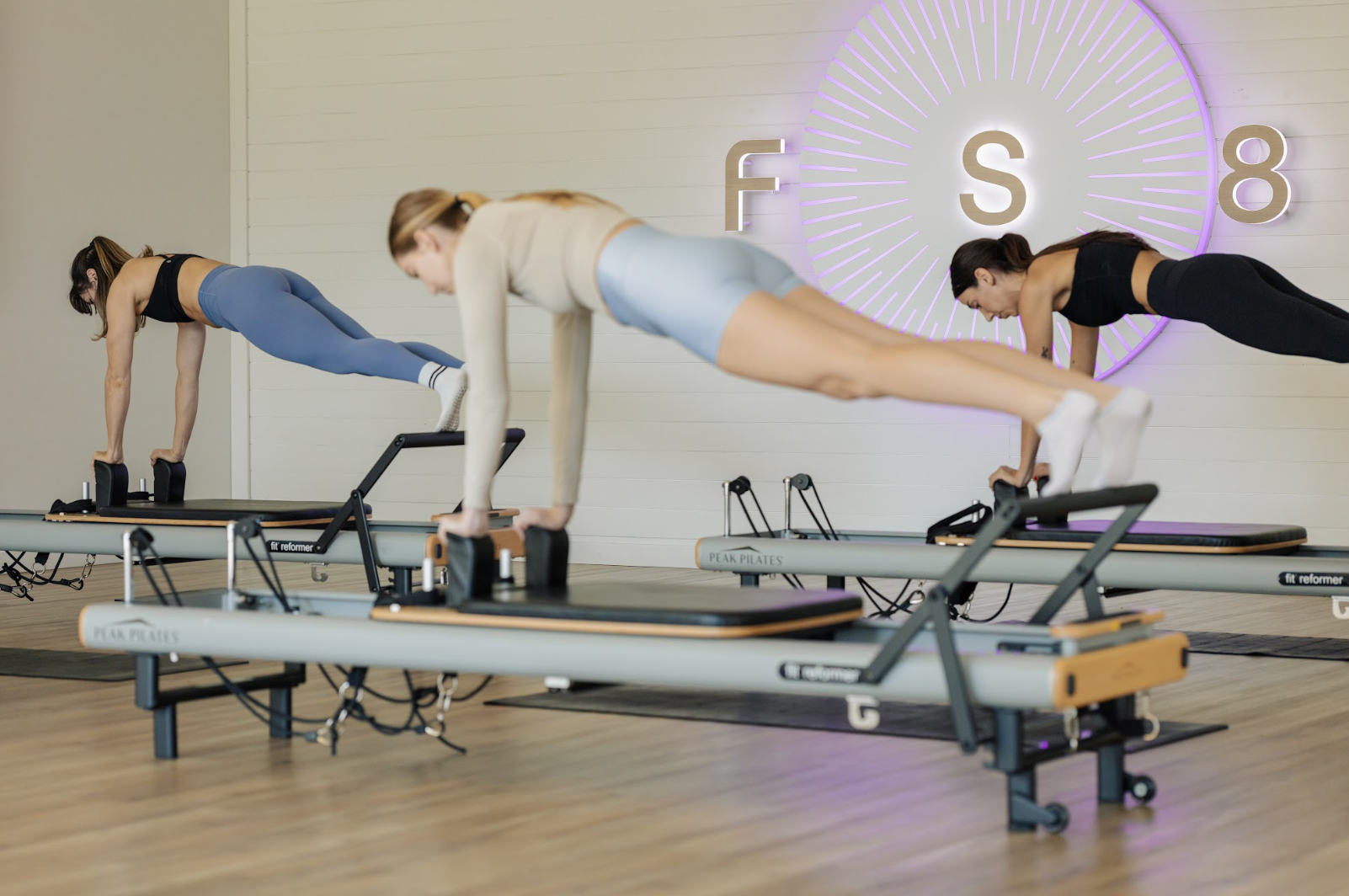
Mobility training rarely gets its roses – mostly because the results are harder to see than lifting heavier or breaking a sweat. But as the saying goes, if you don’t use it, you lose it. Most days, your hips and shoulders work within a narrow band of movement, and, over time, your body adapts to that smaller range. Suddenly, sitting cross-legged on the floor feels like a commitment – and reaching for the top shelf comes with a stretch you didn’t plan for. Because Pilates is slow and controlled, it takes your body back into the ranges you’ve stopped using and builds strength within them. At FS8, our workouts blend Pilates with tone and yoga, moving your body through a complete range of motion. Join us as we unpack what mobility means, and how Pilates helps you build it – before sharing the Pilates mobility exercises we love using in class.
What is mobility?
Mobility is your body’s ability to move through its full range of motion. Sinking into a deep squat and standing back up without a wobble? That’s mobility. So is twisting to grab your bag from the back seat or bending down to pick something up in one smooth move. Pilates for mobility works so well because every movement is slow and deliberate, training your joints to move through their full range with strength and control.
Why is mobility important?
Mobility is behind every move you make, from sinking into a deep lunge in class to chasing a toddler around the backyard. Look after it now, and it looks after you for decades – which is why there are so many benefits of Pilates when you are over 60. Having good mobility:
- Makes everyday moves easier
- Helps you stand and sit taller
- Builds strength you can control
- Keeps movement feeling comfortable
- Sharpens your balance and coordination
- Helps prevent injury
How is Pilates mobility different from stretching?
Stretching and Pilates mobility can both improve your flexibility, but they do it in different ways. Static stretching usually means holding a position while your body stays still. This can help lengthen your muscles and ease tension, which is why we stretch during a cool-down. Pilates is a full-body form of functional strength training, guiding you slowly through each movement with control. Because your muscles keep working across their whole range, you don’t just build flexibility – you build the strength to use it.
10 Pilates mobility exercises to try at FS8
As FS8 athlete Cristina Chan explains, “Our workouts are designed to flow through your full range of motion, working different muscle groups and joints in every class. That variety helps keep your whole body moving well, including the areas we tend to forget about, like your upper back and hip mobility.” Read on for 10 Pilates mobility exercises you’ll find in our classes.
1. Cat-Cow
On all fours, round your spine up toward the ceiling, then let your belly drop as your chest lifts. Moving slowly between the two shapes warms up your whole spine, and matching each move to your breath helps you tune in to your body.
2. Thread the needle
This is a Pilates mobility exercise for anyone who spends the day hunched over a laptop. On all fours, slide one arm under your body until your shoulder rests on the mat, then sweep it up toward the ceiling. Keep your hips stacked over your knees so the twist comes from your upper back, an area where long days behind a desk tend to cause stiffness.
3. Glute bridges
Sitting all day can leave your glutes underworked and the front of your hips tight: bridges target both. Lying on your back with knees bent, peel your spine off the mat one vertebra at a time until your hips lift, then roll back down the same way. At the top, squeeze your glutes to hold the lift instead of arching your lower back.
4. Leg circles
Lying on your back, extend one leg toward the ceiling and draw slow circles while keeping your pelvis still. Your hip moves through its full rotation as your core works to stop your pelvis rocking. On the reformer, you’ll do this with your feet in straps. The springs take up some of the weight of your legs, so you can explore a larger range of motion while staying in control.
5. Low lunge flow
From a low lunge, shift your hips forward to stretch the front of your back hip, then sit back to lengthen your front hamstring. Add a twist by reaching one arm up to rotate your upper back. This yoga-inspired flow is a regular in our classes because it releases the hips after strength work and gets your body moving in more than one direction.
6. Seated spinal twist
Sit tall and lengthen up through your spine, then rotate your upper body to one side with your hand behind you for support. Sitting tall first gives your spine room to turn. Ease into the twist on an exhale and stop where it still feels controlled. Pushing further usually makes your muscles tense up, which limits how far you can move.
7. Mermaid stretch
Sitting with your legs folded to one side (like a mermaid tail), reach one arm overhead and bend sideways, lengthening from hip to fingertips. This Pilates classic opens up your side body and ribcage – areas that most everyday movements miss. Adding a gentle twist at the end brings your shoulders and upper back into the stretch too.
8. Downward dog to plank flow
Shift from downward dog forward into plank, then press back. Downward dog lengthens your hamstrings and calves, while plank asks your shoulders to stabilize and your core to hold you steady. Together, they combine Pilates and yoga movements to strengthen your core and build coordination.
9. Squat-to-stand
The squat is a movement you’ll want for life. You use it every time you get out of a chair or pick something up off the floor, and when you stop squatting deeply, your ankles and hips gradually lose that range. That’s why it earns a spot in any Pilates mobility workout. Fold forward to hold your toes, sink into a deep squat, then straighten your legs again. If your balance feels shaky, grab a bench or doorframe for support.
10. Shoulder openers with bands or light weights
Band pull-aparts and light dumbbell presses add gentle resistance as your shoulders move through their full range, building active mobility and postural strength. Keep your ribs soft and your shoulders away from your ears as you press or pull, so the work stays in your upper back.
5 tips for getting more from Pilates mobility exercises
The reformer and Pilates props are there to help you move further and with more control, but how you use them makes all the difference. When it comes to Pilates and mobility, a few small tweaks can unlock a lot more range. Read on for our five tips to get the most out of every session.
1. Move slowly and with control
In a Pilates mobility workout, the slower you move, the better. Rush into a stretch and your nervous system tightens the muscle to protect you, which is why most of us couldn’t drop into the splits right now. So, take momentum out of the equation. Try counting three seconds into each movement and three seconds out and see how slowly you can move while staying in control. It’s harder than it looks, but your FS8 trainer will be on hand to guide you through.
2. Focus on breath
Your breath sets the pace for every movement. There are plenty of breathwork techniques to explore, but a good place to start is:
- Inhale to prepare
- Exhale on the effort
In a sit-up, for example, you’d inhale to set up, exhale as you curl up, then inhale to reset. Syncing breath and movement also keeps your attention anchored in your body, turning each session into a chance to practice mindful meditation and forget about the world outside of the studio.
3. Don’t force range
Mobility builds gradually, so there’s no prize for forcing a deeper stretch today. At FS8, we want every workout to feel challenging and safe. A strong stretch or muscle burn is normal, but if you feel sharp or sudden pain, ease out of the position straight away and let your instructor know.
4. Think strength and stability, not just stretch
Strong muscles give you control over your joints, so you can move through your full range with confidence. Pilates is a form of strength training: the reformer’s springs and your own body weight provide resistance, while slow, controlled tempos keep your muscles working under tension. Want to make strength more of a priority? Our 30-Day Strength Program is designed to help you build consistency and lay strong foundations. Check in with your local FS8 studio to see when the next program kicks off!
5. Use instructor guidance
One of the many benefits of group exercise is the support you get from your instructor. At FS8, our instructors are highly trained, and they’re there to support you. If a movement doesn’t feel right, tell us. We can adjust it to suit your body or give you a variation that helps you build up to the full version.
Another reason Pilates mobility exercises are so effective is because Pilates is a low-impact form of exercise. Next, discover the benefits of low-impact workouts.